 PROFESSIONAL DATA RECOVERY
Professional Recovery Services
Data Recovery Services and Technical Assessment
Review the recovery services below, then submit the device symptoms through Contact Us. Recovery level, scope, priority and pricing are confirmed after local-office assessment.
Recovery Services
Recovery Services by Storage Type
Select the service that matches your device or infrastructure. Every case begins with diagnosis and a recovery plan tailored to the failure, media type and value of the lost data.
01

Hard Drive Recovery
Recovery from clicking, dropped, damaged, formatted, corrupted and inaccessible mechanical hard drives.
Explore HDD Recovery →02

SSD Recovery
Advanced recovery for SATA, NVMe, M.2, PCIe and enterprise solid-state drives affected by controller or NAND failure.
Explore SSD Recovery →03

RAID Recovery
Recovery and virtual reconstruction for RAID 0, 1, 5, 6, 10 and complex enterprise storage arrays.
Explore RAID Recovery →04

NAS Recovery
Recovery assessment for Synology, QNAP, WD, Buffalo, TerraMaster and other network storage appliances.
Explore NAS Recovery →05

Server Recovery
Recovery assessment for Windows, Linux, rack, tower, blade and application servers.
Explore Server Recovery →06

VMware Recovery
Recovery for ESXi, vSphere, VMDK files, virtual machines and damaged virtual infrastructure.
Explore VMware Recovery →
Recovery Process
Recovery Process: Assessment, Approval and Case Handling
The process can change if diagnosis identifies a different recovery level. Any material change in level, scope or pricing is referred back for customer approval before proceeding.
Submit the issue
Provide the device type, symptoms, business impact and the data you want to recover.
Technical assessment
The local office assesses the failure and identifies the recovery level required.
Review scope and pricing
The proposed level, scope and quotation are shared for approval. If the required level changes later, updated approval is obtained.
Proceed after approval
Recovery work proceeds according to the approved level and local-office handling requirements.
Enterprise Recovery
Business and infrastructure cases are scoped before work begins.
RAID, NAS, server and virtual-environment cases may involve multiple devices, application dependencies or business impact. The local office determines the required recovery level and communicates any change in scope or pricing before proceeding.
RAID / NASServersVirtual environmentsBusiness data
Submit an enterprise enquiry →
Advanced Capabilities
Technical Capabilities for Complex Recovery Cases
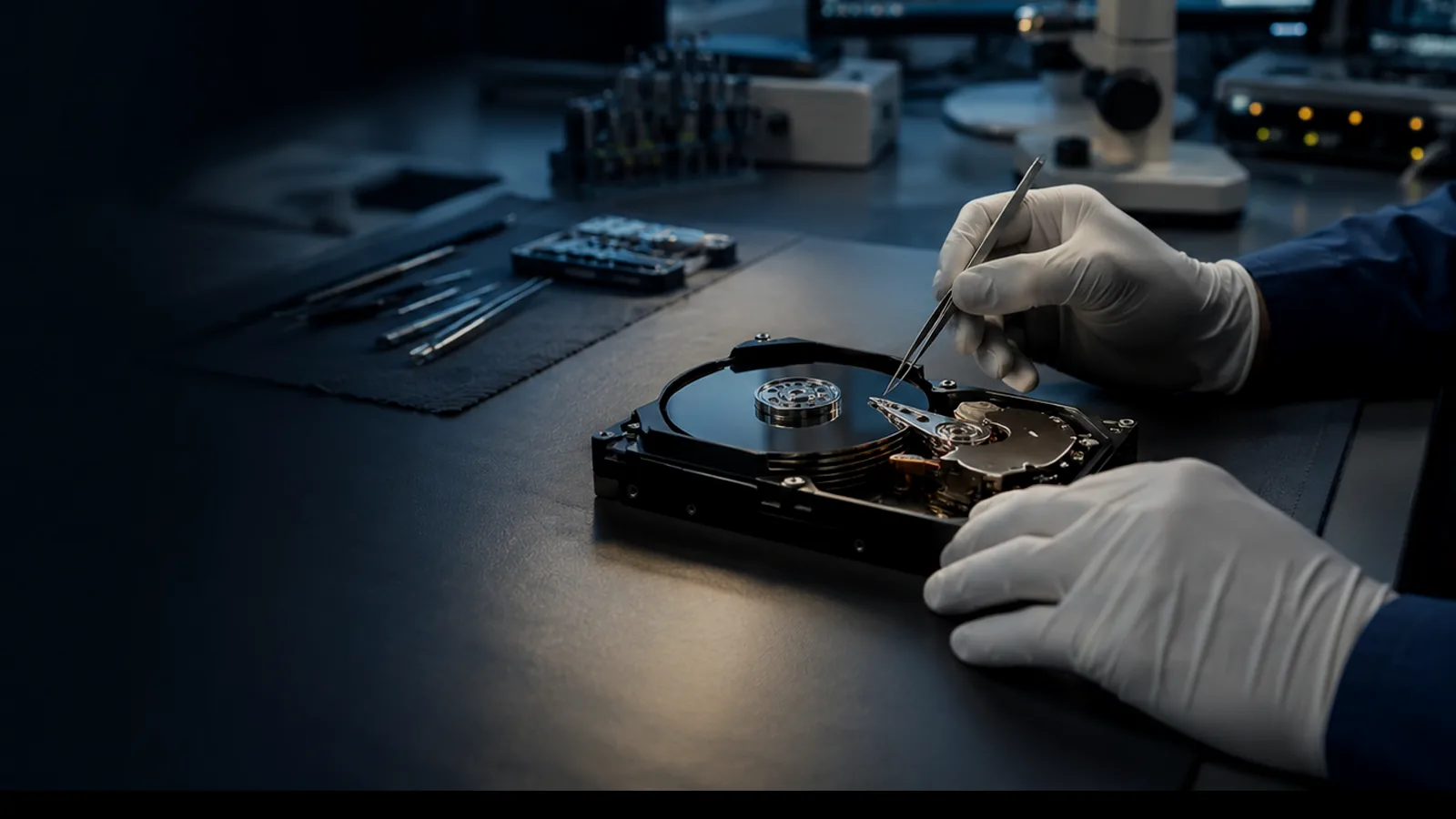
Depending on the device findings and recovery level, the technical route may involve media assessment, imaging, firmware work, virtual reconstruction or file-level recovery procedures.
Physical Media Recovery
Procedures for mechanically damaged hard drives and unstable storage media may be considered after technical assessment.
Firmware and Controller Work
Firmware and controller diagnostics may be used when the assessment identifies those failure areas.
RAID Reconstruction
RAID cases may require virtual reconstruction using array parameters and filesystem analysis.
NAND Flash Recovery
Flash-media cases may require controller, NAND or device-specific recovery procedures.
Virtual Infrastructure
Virtual-infrastructure cases can involve VMDK files, virtual machines, ESXi datastores and application data.
Customer Data Priorities
The customer identifies the files, folders or data that matter most. Those priorities are recorded for the case.
Inside the workflow
Technical assessment before the recovery route is confirmed.
The required process depends on the device condition and recovery level. The local office confirms the case route, customer priorities and any approval required for a change in scope.
TECHNICAL WORKFLOW

Emergency Recovery
Urgent cases can be considered for priority handling.
Emergency or priority handling is not guaranteed by a website selection. The relevant local office decides whether priority handling is available after reviewing the case.
Important pricing note
Emergency or priority handling is charged at a higher rate than normal handling. The applicable level, availability and price are confirmed by the local office before work proceeds.
Submit an Urgent Enquiry
Case Handling Standards
Case Handling Standards Based on the Approved Recovery Level
Recovery outcomes depend on the device condition and technical findings. The local office confirms the current recovery level and seeks approval before additional higher-level work proceeds if the scope changes.
Recovery level is confirmed
The local office assesses the device and identifies the recovery level required for the current findings.
Changes in level require approval
If a Level 1 case is later found to require Level 2, Level 3 or a higher recovery level, the revised scope and pricing are referred to the customer for approval before the additional work proceeds.
Customer recovery priorities are recorded
The customer is asked which files, folders or data are most important. Recovery priorities are based on that information and what is technically possible.
Frequently Asked Questions
Service Questions Before You Submit a Case
Every recovery case is different, but these answers explain what most customers need to know before sending a device.
Ask a recovery specialist →The local office assesses the device and the current findings. If later diagnosis shows that a different or higher recovery level is required, the revised scope and pricing are shared for approval before the additional work proceeds.
No recovery time is guaranteed from the website. Timing depends on the device condition, recovery level, parts or technical work required, and the local office handling the case.
You can tell us that the case is urgent. The local office decides whether emergency or priority handling is available, and this type of handling is charged at a higher rate than normal service.
Tell us which files, folders or business data matter most. The local office records those priorities and explains what can be addressed based on the device condition and recovery route.
Technical Enquiry